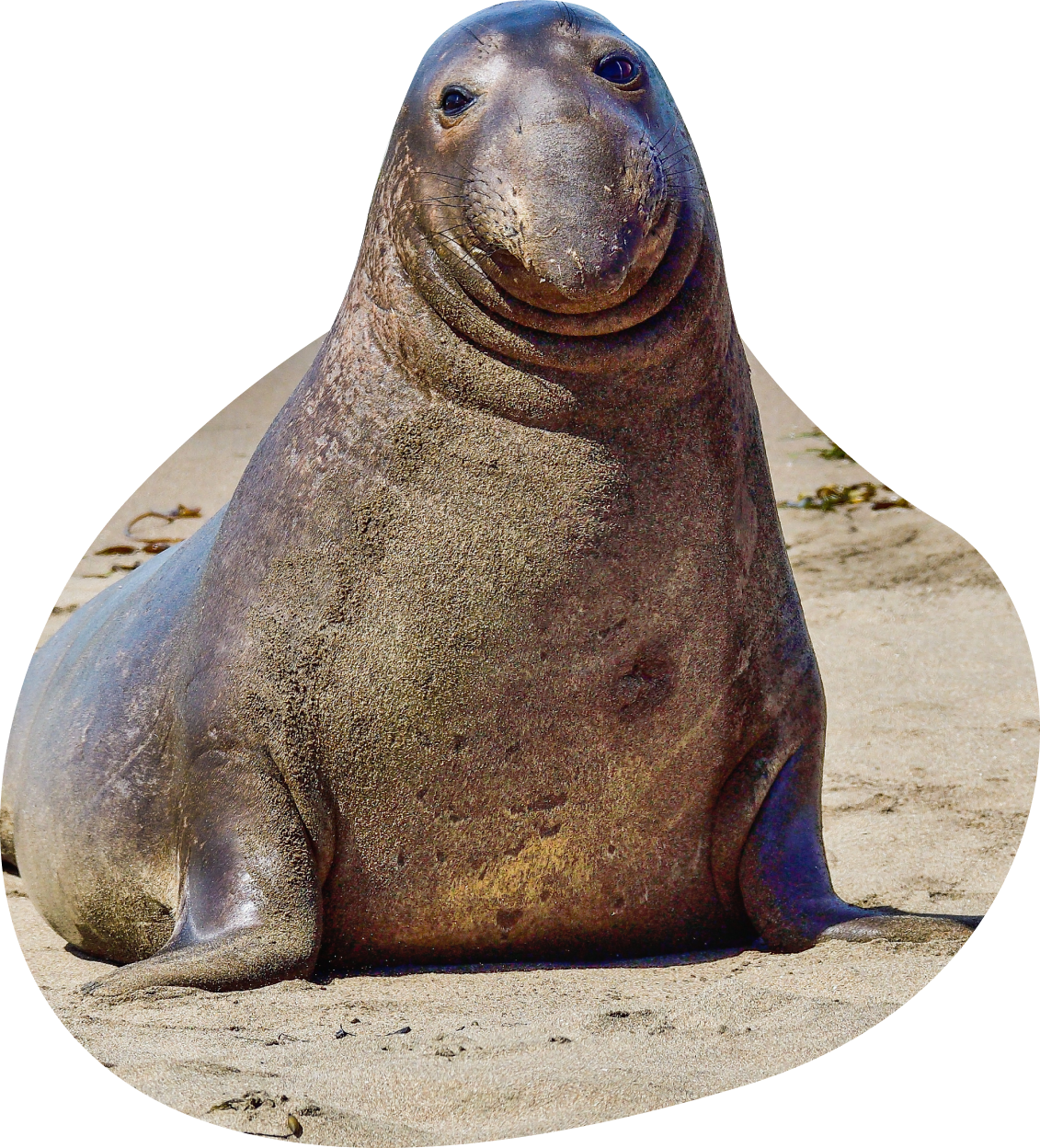
The Glide Plush

Regular price £24.95
Sale price £24.95 Regular price
(Tax included )
  • Tracked via SPOT (Smart Position and Temperature) tagTracked via SPOT (Smart Position and Temperature) tag
  • This animal’s safety guarded with the Fahlo Protection Ping™This animal’s safety guarded with the Fahlo Protection Ping™

​Every Fahlo tracking experience includes the Fahlo Protection Ping™. This indicates each animal’s unique path may be live, delayed, or historical based on required safety protocol in accordance with our nonprofit partners.

While the experience of following an animal’s journey remains the same for you, we work behind the scenes with our partners to ensure this experience is presented in a way that keeps the animals safe, one step or splash at a time.

Packed with blubber—um, fluff— and created in partnership with UC Santa Cruz Beltran Lab + Seymour Marine Discovery Center, each seal plush unlocks an interactive tracking map and helps Fahlo support their conservation.

  • Add 2 or more plush for free shippingAdd 2 or more plush for free shipping
  • Fahlo donates 10% of all profits to our nonprofit partnersFahlo donates 10% of all profits to our nonprofit partners
  • Stuffing made from recycled water bottlesStuffing made from recycled water bottles
  • Huggable for all agesHuggable for all ages
  • Size: 17”Size: 17”

*Free shipping may not be valid with promotional discounts unless otherwise stated. For more details visit the FAQ page.

  • SSL Secure CheckoutSSL Secure Checkout
  • Worldwide ShippingWorldwide Shipping
  • Dedicated Customer ServiceDedicated Customer Service
  • 100% Happiness Guarantee100% Happiness Guarantee
Tracking Real Animals
Out In The Wild
One Small Plush.
One Big Mission.
We donate 10% of profits to UC Santa Cruz Beltran Lab + Seymour Marine Discovery Center and their work studying elephant seals and their habitats. The Glide Plush helps further this mission with every purchase, tracking northern elephant seals in the Pacific.
Mission Map
How You're Helping
Tracking provided in partnership with

UC Santa Cruz Beltran Lab + Seymour Marine Discovery Center study young elephant seals during their first few trips to sea, and adult females on their long routine migrations. They aim to maintain seal populations while gathering data on their biology, ecology, and at-sea behavior to inform conservation strategies for marine megafauna worldwide.

Conservation status

  • EX
  • EW
  • CR
  • EN
  • VU
  • NT
  • LC
    Least Concern
  • DD
  • NE
Reviews
Common Questions
common question image

Why are seals tracked?

Elephant seals are tracked with electronic instruments for a variety of reasons, including where they travel and feed during their foraging migrations, how they expertly navigate through the ocean, how much they are able to eat during foraging trips, how they avoid predators like white sharks and killer whales, and even how they sleep. 

The elephant seal tracks researchers have shared with Fahlo are also helping scientists learn how these behavioral strategies are different between male and female seals, and how they develop as seals grow older. In recent years, elephant seals have helped scientists understand more about the ocean environment by carrying tags that collect information about chlorophyll content, dissolved oxygen, light levels, and the distribution of small fish and squid in the twilight zone (200–1000 meters deep) of the ocean. All of these metrics of ocean health provide valuable insight into the distribution and abundance of important resources that large predators like elephant seals rely on.

How are seals tracked?

Elephant seals are tracked in a couple different ways. First, a select few seals each year are equipped with flipper tags with a unique alphanumeric ID that allows researchers to find them on the beach each year and record their age, whether they are raising a pup, and which other seals they are interacting with. 

Seals are also often given a hair dye mark on their fur to help researchers more easily identify individual seals in a large group. To track where seals go and measure other variables in the ocean, scientists carefully sedate and equip seals with location trackers that either transmit data in real time to a satellite when the seal is at the surface, or store the data onboard the device for scientists to recover from the seal when it returns to the beach to breed or molt in between foraging migrations. The trackers are affixed to the seal’s fur with a quick-setting marine glue. After the tags are recovered, the seals naturally shed the remaining glue through a process called a catastrophic molt, during which they shed all their fur and outer layer of skin at once.

Does tracking harm the seals?

Nope! Because seals are so large, they can carry these small instruments with no adverse effects. Scientists partner with a federal permitting agency and institutional care committee to ensure they are using best practices, including selecting tags that are small and light. They also undergo extensive animal handling training which includes monitoring during and after sedation. Together, these steps ensure that trackers do not impact the seals.

What is a group of seals called?

A group of seals is called a colony, though northern elephant seals can be broken down into harems, which are groups of females with one dominant male.

How do seals sleep?

While at sea, northern elephant seals will dive deeper where predators are fewer in order to sleep. They may sleep floating upright, or nod off in a gentle glide through the water. While on land when they are not feeding and need to conserve energy, elephant seals may sleep for up to 10 hours per day!

How big are elephant seals?

Fully grown male elephant seals can reach up to 5,000 lb (2,268 kg) and grow up to 13 ft (4 m) long! The females are significantly smaller, weighing up to 1,500 lb (680 kg) and 10 ft (3 m) in length.

What sound do elephant seals make?

Northern elephant seals are at their noisiest when males are establishing dominance; their trunk-like noses inflate to produce a loud, throaty roar! Males also communicate with low-frequency guttural sounds, clicks, and snorts. Females make burping noises and produce even lower frequency sounds than the males, though they will also screech or yell to protect their pups.

My plush arrived a little misshapen, what do I do?

Your plush had quite the long journey to get to you! If it appears squished from lack of legroom during shipping, give it a good fluff to help it return to its normal, cuddly shape. Still need help? Email us at support@myfahlo.com.

    • Elephant seals are tracked with electronic instruments for a variety of reasons, including where they travel and feed during their foraging migrations, how they expertly navigate through the ocean, how much they are able to eat during foraging trips, how they avoid predators like white sharks and killer whales, and even how they sleep. 

      The elephant seal tracks researchers have shared with Fahlo are also helping scientists learn how these behavioral strategies are different between male and female seals, and how they develop as seals grow older. In recent years, elephant seals have helped scientists understand more about the ocean environment by carrying tags that collect information about chlorophyll content, dissolved oxygen, light levels, and the distribution of small fish and squid in the twilight zone (200–1000 meters deep) of the ocean. All of these metrics of ocean health provide valuable insight into the distribution and abundance of important resources that large predators like elephant seals rely on.

    • Elephant seals are tracked in a couple different ways. First, a select few seals each year are equipped with flipper tags with a unique alphanumeric ID that allows researchers to find them on the beach each year and record their age, whether they are raising a pup, and which other seals they are interacting with. 

      Seals are also often given a hair dye mark on their fur to help researchers more easily identify individual seals in a large group. To track where seals go and measure other variables in the ocean, scientists carefully sedate and equip seals with location trackers that either transmit data in real time to a satellite when the seal is at the surface, or store the data onboard the device for scientists to recover from the seal when it returns to the beach to breed or molt in between foraging migrations. The trackers are affixed to the seal’s fur with a quick-setting marine glue. After the tags are recovered, the seals naturally shed the remaining glue through a process called a catastrophic molt, during which they shed all their fur and outer layer of skin at once.

    • Nope! Because seals are so large, they can carry these small instruments with no adverse effects. Scientists partner with a federal permitting agency and institutional care committee to ensure they are using best practices, including selecting tags that are small and light. They also undergo extensive animal handling training which includes monitoring during and after sedation. Together, these steps ensure that trackers do not impact the seals.

    • A group of seals is called a colony, though northern elephant seals can be broken down into harems, which are groups of females with one dominant male.

    • While at sea, northern elephant seals will dive deeper where predators are fewer in order to sleep. They may sleep floating upright, or nod off in a gentle glide through the water. While on land when they are not feeding and need to conserve energy, elephant seals may sleep for up to 10 hours per day!

    • Fully grown male elephant seals can reach up to 5,000 lb (2,268 kg) and grow up to 13 ft (4 m) long! The females are significantly smaller, weighing up to 1,500 lb (680 kg) and 10 ft (3 m) in length.

    • Northern elephant seals are at their noisiest when males are establishing dominance; their trunk-like noses inflate to produce a loud, throaty roar! Males also communicate with low-frequency guttural sounds, clicks, and snorts. Females make burping noises and produce even lower frequency sounds than the males, though they will also screech or yell to protect their pups.

    • Your plush had quite the long journey to get to you! If it appears squished from lack of legroom during shipping, give it a good fluff to help it return to its normal, cuddly shape. Still need help? Email us at support@myfahlo.com.

App download background image
App download devices image

Get the full tracking experience

When you track, we give back. Each purchase unlocks a real animal’s path on an interactive 3D map, with exciting reveals, epic journeys, and a global impact on vital conservation efforts. Download the Fahlo app and collect them all!