
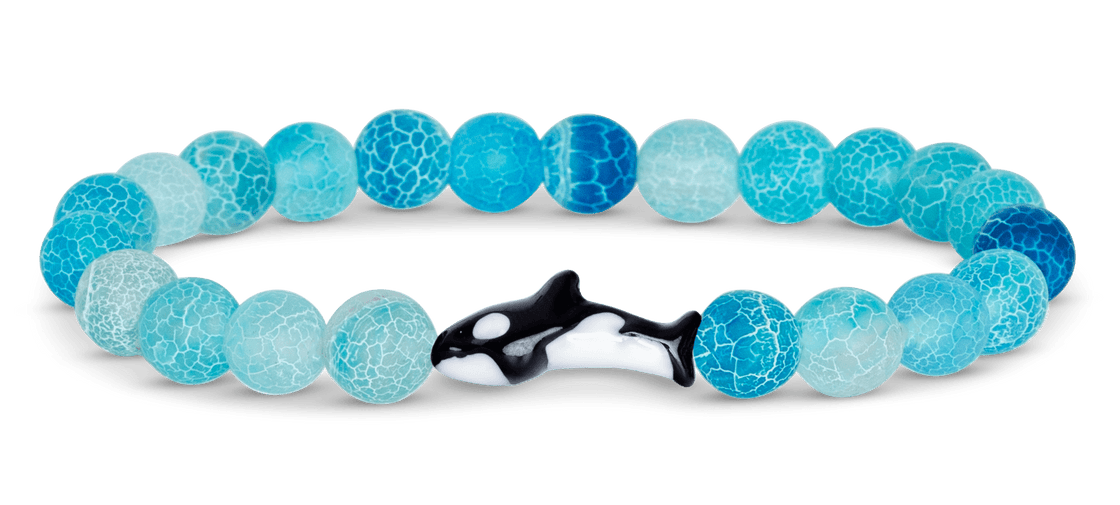
The Cruise Bracelet

Regular price $16.95
Sale price $16.95 Regular price
Aqua Blue
  • Tracked via SPOT (Smart Position and Temperature) tagTracked via SPOT (Smart Position and Temperature) tag
  • This animal’s safety guarded with the Fahlo Protection Ping™This animal’s safety guarded with the Fahlo Protection Ping™

Every Fahlo tracking experience includes the Fahlo Protection Ping™. This indicates each animal’s unique path may be live, delayed, or historical based on required safety protocol in accordance with our nonprofit partners.

While the experience of following an animal’s journey remains the same for you, we work behind the scenes with our partners to ensure this experience is presented in a way that keeps the animals safe, one step or splash at a time.

For a limited time, track and cruise the currents with some recently tagged orcas BEFORE their official launch later this year! These iconic mammals are on the go in the Atlantic, and we don’t want you to miss a second of it.

Created in partnership with the FIU Marine Mammal Ecology Lab, The Cruise Bracelet tracks orcas on an interactive map and helps Fahlo support their conservation.

  • Add 3 or more and get free shipping!Add 3 or more and get free shipping!
  • Fahlo donates 10% of all profits to our nonprofit partnersFahlo donates 10% of all profits to our nonprofit partners
  • Sizing: Elastic, one size fits mostSizing: Elastic, one size fits most

Hand-strung and one of a kind: Because our bracelets are made from natural crushed stone or glass, slight variations in bead color and pattern make each one totally unique!

*Free shipping may not be valid with promotional discounts unless otherwise stated. For more details visit the FAQ page.

  • SSL Secure CheckoutSSL Secure Checkout
  • Worldwide ShippingWorldwide Shipping
  • Dedicated Customer ServiceDedicated Customer Service
  • 100% Happiness Guarantee100% Happiness Guarantee
Tracking Real Animals
Out In The Wild
Made in partnership with the FIU Marine Mammal Ecology Lab to study marine megafauna and support their conservation. Your purchase helps Fahlo further this mission alongside community education and awareness efforts.
Mission Map
How It Works
ocean mandala pattern

Buy a bracelet or plush of your favorite animal species.

ocean mandala pattern 2
ocean mandala pattern 1
fahlo bracelet
fahlo tracking card
fahlo bracelet

You’re now tracking

Onyx

world map background tracking path on world map
map marker
orca app about content header image orca app about content body image
orca app updates content header image orca app updates content body image
ocean app rewards - background image
ocean app rewards - levels image
ocean app rewards - header image
Reviews
Common Questions
common question image

Why are orcas tracked?

"Orcas are tracked off the coast of Northern Norway to investigate the effects of the region’s herring migration patterns on their movements, as well as how climate change is affecting where they choose to travel. Additionally, researchers are looking at the effect of group membership and kinship on the diet and movements of these animals."


To learn more about the work our partner is doing, visit their site directly at marineconservationecologylab.com.

How are orcas tracked?

To track orcas, researchers use satellite tags implanted in their large dorsal fins. A small antenna transmits information to satellites that can then be read on computers and even cell phones—these devices can provide several locations each day to help determine where orcas go and how fast they travel, which are key indicators of how they use ocean habitats.


To learn more about the work our partner is doing, visit their site directly at marineconservationecologylab.com.

Does tracking harm the orcas?

Tracking does not harm the orcas. The tags we deploy are specifically designed not to cause pain or discomfort. We deploy tags in the dorsal fin, made of connective tissues. Once we tag them, orcas don't even seem to notice that they carry one of our tags! These animals are our passion, and before being scientists, we love them, and we always try to minimize our impact on their lives.

Orcas are affected by a wide variety of threats across the world's oceans. In some regions, orcas are negatively impacted by sea ice loss, particularly in Antarctic waters. In other regions, such as Europe, chemical pollution is a major issue affecting their immune system and reproduction. In some cases, threats are cumulative, and several of them can impact populations. For example, off the coast of Washington State, Southern Resident killer whales are impacted by the decline of their favorite prey (salmon) and are too frequently disturbed by maritime traffic.


To learn more about the work our partner is doing, visit their site directly at marineconservationecologylab.com.

When is the official orca tracking bracelet launch?

Keep an eye out for more bracelet colors and orcas November 2026!

How much does an orca weigh?

Adult male orcas are significantly larger than females, weighing between 8,000–12,000 lb (3,600–5,400 kg) on average. Females typically weigh in at around 3,000–8,000 lb (1,360 to 3,600 kg). Despite their size, orcas can jump up to 15 ft (4.5 m) out of the water!

What does orca mean?

The word “orca” in Latin refers to the shape of a barrel or cask, and orcas likely were named due to their body shape.

Are orcas whales?

Actually, no! Orcas are not whales—though they are classified as toothed whales, they are actually the largest species of dolphin.

What is the difference between orcas and killer whales?

There is no difference! Orcas and killer whales are the same animal. “Orca” is derived from the species’ scientific name Orcinus orca, whereas “killer whale” is a nickname given originally by 18th-century sailors who witnessed them killing whales at sea. 

Are orcas still endangered?

Orcas are classified as “Data Deficient” by the IUCN (International Union for the Conservation of Nature), meaning there is not enough data to declare the entire species endangered. The United States’ only endangered population includes the Southern Residents, which range from Alaska to California and face threats such as lack of available prey, noise pollution and toxic contaminants, and disturbances from vessel traffic.

    • "Orcas are tracked off the coast of Northern Norway to investigate the effects of the region’s herring migration patterns on their movements, as well as how climate change is affecting where they choose to travel. Additionally, researchers are looking at the effect of group membership and kinship on the diet and movements of these animals."


      To learn more about the work our partner is doing, visit their site directly at marineconservationecologylab.com.

    • To track orcas, researchers use satellite tags implanted in their large dorsal fins. A small antenna transmits information to satellites that can then be read on computers and even cell phones—these devices can provide several locations each day to help determine where orcas go and how fast they travel, which are key indicators of how they use ocean habitats.


      To learn more about the work our partner is doing, visit their site directly at marineconservationecologylab.com.

    • Tracking does not harm the orcas. The tags we deploy are specifically designed not to cause pain or discomfort. We deploy tags in the dorsal fin, made of connective tissues. Once we tag them, orcas don't even seem to notice that they carry one of our tags! These animals are our passion, and before being scientists, we love them, and we always try to minimize our impact on their lives.

      Orcas are affected by a wide variety of threats across the world's oceans. In some regions, orcas are negatively impacted by sea ice loss, particularly in Antarctic waters. In other regions, such as Europe, chemical pollution is a major issue affecting their immune system and reproduction. In some cases, threats are cumulative, and several of them can impact populations. For example, off the coast of Washington State, Southern Resident killer whales are impacted by the decline of their favorite prey (salmon) and are too frequently disturbed by maritime traffic.


      To learn more about the work our partner is doing, visit their site directly at marineconservationecologylab.com.

    • Keep an eye out for more bracelet colors and orcas November 2026!

    • Adult male orcas are significantly larger than females, weighing between 8,000–12,000 lb (3,600–5,400 kg) on average. Females typically weigh in at around 3,000–8,000 lb (1,360 to 3,600 kg). Despite their size, orcas can jump up to 15 ft (4.5 m) out of the water!

    • The word “orca” in Latin refers to the shape of a barrel or cask, and orcas likely were named due to their body shape.

    • Actually, no! Orcas are not whales—though they are classified as toothed whales, they are actually the largest species of dolphin.

    • There is no difference! Orcas and killer whales are the same animal. “Orca” is derived from the species’ scientific name Orcinus orca, whereas “killer whale” is a nickname given originally by 18th-century sailors who witnessed them killing whales at sea. 

    • Orcas are classified as “Data Deficient” by the IUCN (International Union for the Conservation of Nature), meaning there is not enough data to declare the entire species endangered. The United States’ only endangered population includes the Southern Residents, which range from Alaska to California and face threats such as lack of available prey, noise pollution and toxic contaminants, and disturbances from vessel traffic.

App download background image
App download devices image

Get the full tracking experience

When you track, we give back. Each purchase unlocks a real animal’s path on an interactive 3D map, with exciting reveals, epic journeys, and a global impact on vital conservation efforts. Download the Fahlo app and collect them all!