Tracked via SPOT (Smart Position and Temperature) tag
This animal’s safety guarded with the Fahlo Protection Ping™
Every Fahlo tracking experience includes the Fahlo Protection Ping™. This indicates each animal’s unique path may be live, delayed, or historical based on required safety protocol in accordance with our nonprofit partners.
While the experience of following an animal’s journey remains the same for you, we work behind the scenes with our partners to ensure this experience is presented in a way that keeps the animals safe, one step or splash at a time.
Add 2 or more plush for free shipping
Fahlo donates 10% of all profits to our nonprofit partners
Stuffing made from recycled water bottles
Huggable for all ages
Size: 12.5"
*Free shipping may not be valid with promotional discounts unless otherwise stated. For more details visit the FAQ page.
SSL Secure Checkout
Worldwide Shipping
100% Happiness Guarantee
Dedicated Customer Service
We donate 10% of profits to Sea Turtle Conservancy and their ongoing research, education, and advocacy for sea turtles worldwide. The Journey Plush helps further this mission with every purchase, tracking leatherback sea turtles through the ocean.
Engineers of the world’s most successful sea turtle conservation and recovery programs, the Sea Turtle Conservancy has been protecting these ancient creatures for over 60 years. Ongoing research, education, and advocacy for sea turtles helps ensure their survival and that of our planet’s marine and coastal ecosystems.
Conservation status
EX
EW
CR
EN
Endangered
VU
NT
LC
DD
NE
Customer Reviews
Overall rating: 5.0 / 5 from 78 reviews.
Bought this for my older brother who loves turtles - he is a huge fan! Well made, adorable, and fun to track a real animal.
I love everything I get from you guys. The leatherback sea turtle plush is adorable. Plus I also love that every purchase helps animals so they can live in their natural habitats.
I love the turtle that was assigned to me, her name is Phoebe. Following her journey has been entertained and a learning experience. The plush is beautiful.
My second leatherback turtle plushie. I bought the first one during the limited edition and was EXTREMELY impressed at the quality. I bought this one to gift to my granddaughter's teacher.
I love tracking animals with fahlo, especially with cute plushies like this one! ! It's a good quality plush and SUPER SOFT. Plus, I get to track a turtle!!
These were a great texture and look exactly how shown. Except it’s bigger than I thought and I love it. I never really thought I’d buy anything but Shark merch from Fahlo. However I really like supporting their cause and collecting special edition marine life merch is fun.
My daughter loved the leatherback turtle plushie but it’s not as soft as the gorilla. Our first turtle didn’t move for several weeks amd thankfully Fahlo got us a new turtle to track and learn about since it was in the first year.
I want one of every animal plushie they have but sadly some dont seem to ever be coming back to stock... like the scout (wolf) plushie... super enjoy tracking my leatherback sea turtle phoebe and so thus my plushie is phoebe. Downside is u dont get the post card with her Pic and info like with a bracelet. But thats ok since it is on the app. Plus the plushie is soooo soft and great quality!
I was so excited to get this plush leatherback turtle. My cat also was really excited to roll all over this plushie. I get daily notifications of her tracking and an curious on where she is headed.
Purchased for my 10 year old grandson and he loved it! He was leaving to go on a cruise and they will be rescuing sea turtles on one of their excursions!
Bought for my 6y/o who adores sea animals. We already had the regular turtle plush, so thrilled the leatherback came back into stock.
It's beautifully made and buttery soft. Gorgeous.
“Since most research conducted on marine turtles has been carried out on nesting beaches and well over 90% of a sea turtle’s life is spent in the water—feeding, mating, migrating and doing whatever else a sea turtle does when no one is watching, we are missing important information that can help us better protect sea turtles. In particular, to adequately protect sea turtles in all their habitats, we must learn more about their migratory patterns, their behavior at sea, where their marine habitats are located, how the turtles use these different habitats, and the migration routes turtles travel between habitats. Satellite telemetry (following an object on the earth with the use of orbiting satellites) has advanced to the stage of allowing researchers to track turtles in the open ocean after attaching a Platform Terminal Transmitter (PTT) to the back of a sea turtle.” – Sea Turtle Conservancy
To learn more about why sea turtles are tracked, visit our partner directly at conserveturtles.org.
How are sea turtles tracked?
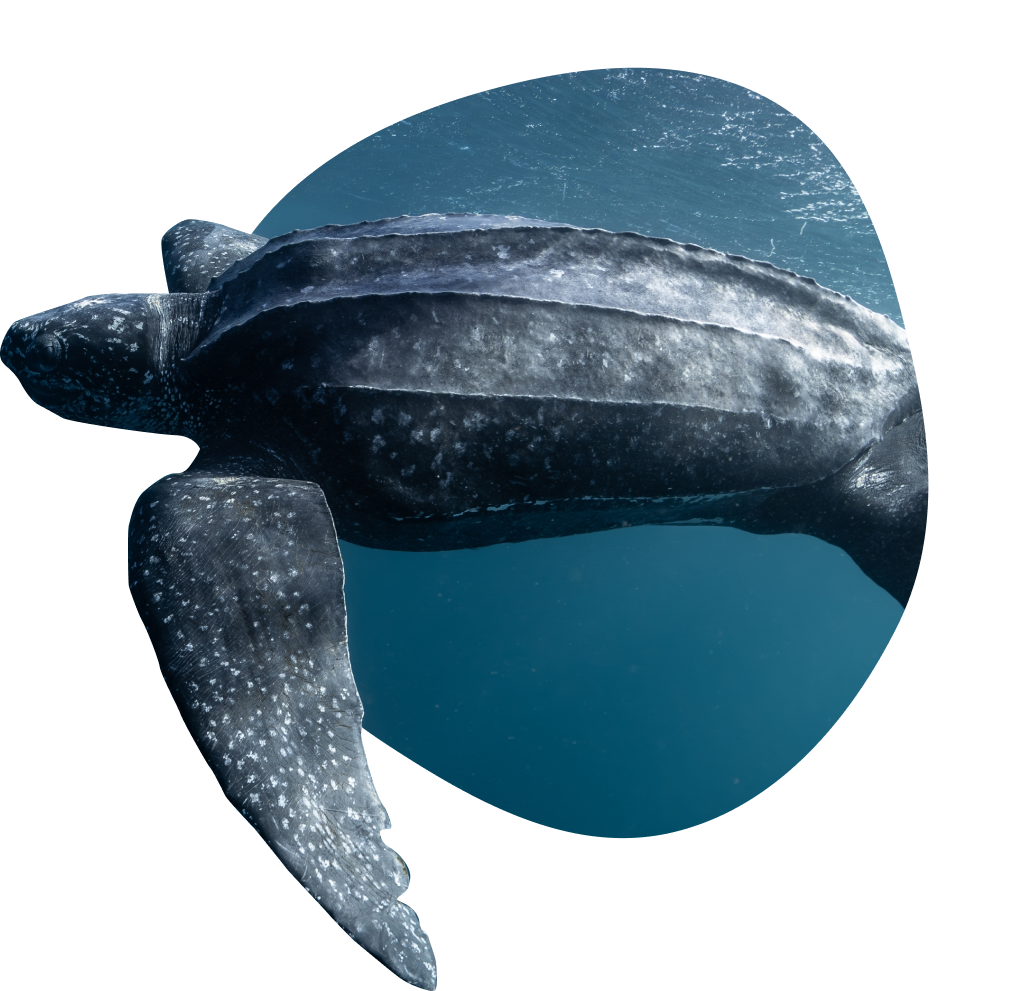
“There are currently three common methods to attach a transmitter to a sea turtle. Two methods are for all sea turtles, except leatherbacks. The first of these methods uses fiberglass and resin to create a hard cover that goes over the transmitter and attaches to the shell. The second method uses a non-heat epoxy to “glue” the bottom of the transmitter to the turtle’s shell. Because of their unique shell, neither of these methods can be used for a leatherback. Instead, the transmitter is attached directly through the dorsal ridge.” – Sea Turtle Conservancy
To learn more about how sea turtles are tracked, visit our partner directly at conserveturtles.org.
Does tracking harm the sea turtles?
“Proper attachment methods are designed not to harm the sea turtle, damage its shell or increase the turtle’s chances of being tangled. While researchers continue to modify and develop new techniques to reduce any impacts to sea turtles, having a transmitter attached does create some additional drag while the turtle is swimming. Researchers have recorded females returning to successfully nest after having a transmitter attached, which suggests that having a transmitter does not impact a sea turtle’s migration, feeding and mating behavior.” – Sea Turtle Conservancy
Leatherbacks typically grow 4–6 ft (130–183 cm) long and tip the scales at 660 to 1,100 lb (300–500 kg). The largest leatherback ever recorded measured in at a whopping 10 ft (305 cm) from tip to tail, and weighed 2,019 lb (916 kg)!
Where do leatherback sea turtles live?
Leatherbacks are the most well-traveled of all sea turtle species, found around the globe. Their powerful flippers enable them to swim thousands of miles, and their range extends as far south as the tip of Africa and as far north as Alaska! They’re the only known reptile to remain active at such low water temperatures.
What do leatherback sea turtles eat?
The leatherback’s scissor-like jaws are quite delicate and specially designed for an almost exclusive jellyfish diet. Jellyfish are not very nutrient-rich and contain mostly water, so it’s surprising that these colossal turtles can survive on them.
How do I wash my leatherback sea turtle plush?
Wipe with damp sponge or cloth, using warm water and mild soap. Once dry, brush to restore the plush and proceed with snuggling.
“Since most research conducted on marine turtles has been carried out on nesting beaches and well over 90% of a sea turtle’s life is spent in the water—feeding, mating, migrating and doing whatever else a sea turtle does when no one is watching, we are missing important information that can help us better protect sea turtles. In particular, to adequately protect sea turtles in all their habitats, we must learn more about their migratory patterns, their behavior at sea, where their marine habitats are located, how the turtles use these different habitats, and the migration routes turtles travel between habitats. Satellite telemetry (following an object on the earth with the use of orbiting satellites) has advanced to the stage of allowing researchers to track turtles in the open ocean after attaching a Platform Terminal Transmitter (PTT) to the back of a sea turtle.” – Sea Turtle Conservancy
To learn more about why sea turtles are tracked, visit our partner directly at conserveturtles.org.
“There are currently three common methods to attach a transmitter to a sea turtle. Two methods are for all sea turtles, except leatherbacks. The first of these methods uses fiberglass and resin to create a hard cover that goes over the transmitter and attaches to the shell. The second method uses a non-heat epoxy to “glue” the bottom of the transmitter to the turtle’s shell. Because of their unique shell, neither of these methods can be used for a leatherback. Instead, the transmitter is attached directly through the dorsal ridge.” – Sea Turtle Conservancy
To learn more about how sea turtles are tracked, visit our partner directly at conserveturtles.org.
“Proper attachment methods are designed not to harm the sea turtle, damage its shell or increase the turtle’s chances of being tangled. While researchers continue to modify and develop new techniques to reduce any impacts to sea turtles, having a transmitter attached does create some additional drag while the turtle is swimming. Researchers have recorded females returning to successfully nest after having a transmitter attached, which suggests that having a transmitter does not impact a sea turtle’s migration, feeding and mating behavior.” – Sea Turtle Conservancy
Leatherbacks typically grow 4–6 ft (130–183 cm) long and tip the scales at 660 to 1,100 lb (300–500 kg). The largest leatherback ever recorded measured in at a whopping 10 ft (305 cm) from tip to tail, and weighed 2,019 lb (916 kg)!
Leatherbacks are the most well-traveled of all sea turtle species, found around the globe. Their powerful flippers enable them to swim thousands of miles, and their range extends as far south as the tip of Africa and as far north as Alaska! They’re the only known reptile to remain active at such low water temperatures.
The leatherback’s scissor-like jaws are quite delicate and specially designed for an almost exclusive jellyfish diet. Jellyfish are not very nutrient-rich and contain mostly water, so it’s surprising that these colossal turtles can survive on them.
Wipe with damp sponge or cloth, using warm water and mild soap. Once dry, brush to restore the plush and proceed with snuggling.
6,000,000+
Users worldwide
Track real wildlife with the Fahlo app
When you track, we give back. Each purchase unlocks a real animal’s path on an interactive 3D map, with exciting reveals, epic journeys, and a global impact on vital conservation efforts. Download the Fahlo app and collect them all!
Choosing a selection results in a full page refresh.