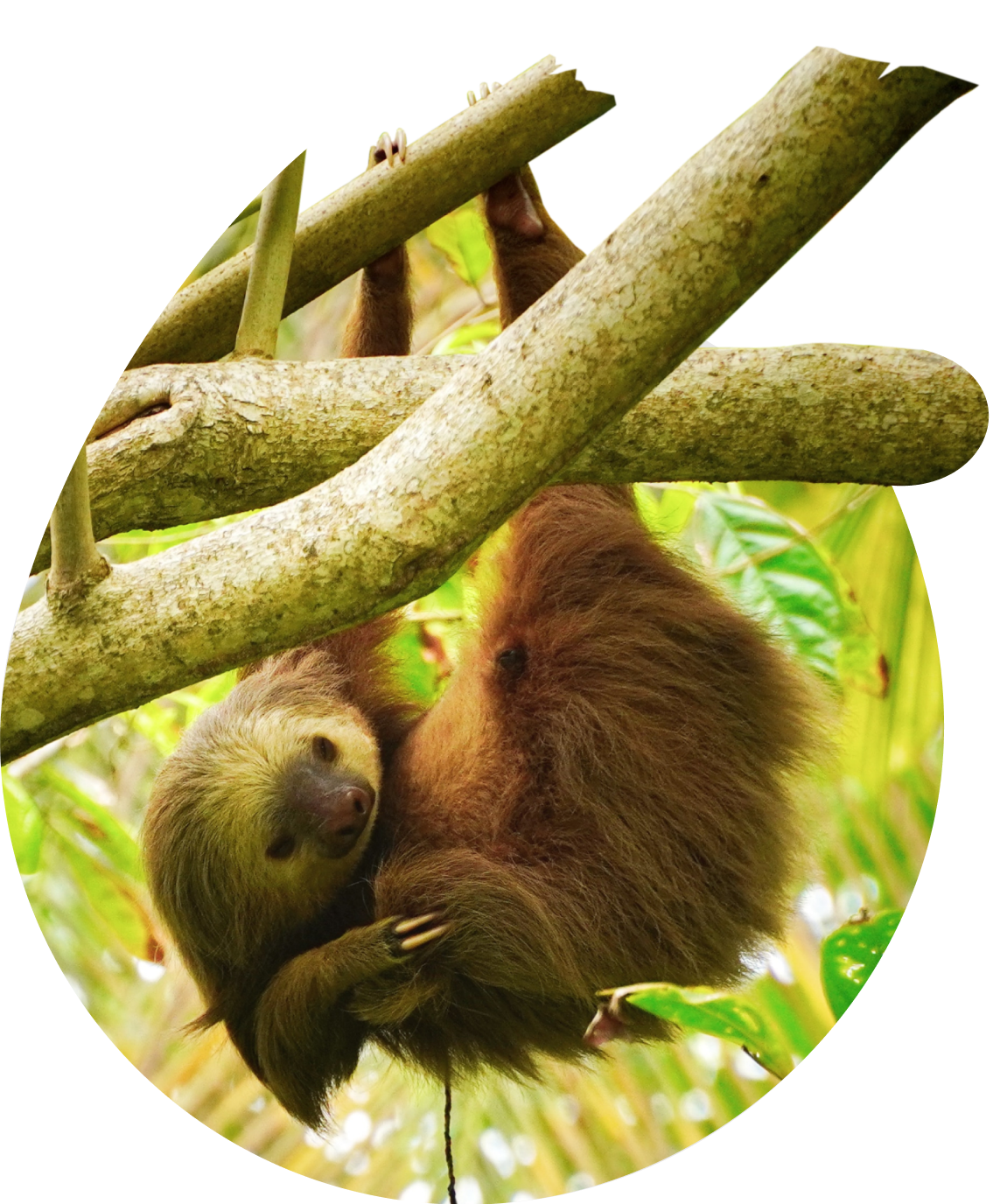
This animal’s safety guarded with the Fahlo Protection Ping™
Every Fahlo tracking experience includes the Fahlo Protection Ping™. This indicates each animal’s unique path may be live, delayed, or historical based on required safety protocol in accordance with our nonprofit partners.
While the experience of following an animal’s journey remains the same for you, we work behind the scenes with our partners to ensure this experience is presented in a way that keeps the animals safe, one step or splash at a time.
Track a real sloth and chill with this one! Created in partnership with The Sloth Conservation Foundation, each sloth plush unlocks an interactive tracking map and helps Fahlo support their conservation.
SSL Secure Checkout
Dedicated Customer Service
100% Happiness Guarantee
We donate 10% of profits to The Sloth Conservation Foundation and their work protecting wild sloths in Costa Rica. The Wander Plush helps further this mission with every purchase, tracking two-and three-toed sloths through the canopies.
The Sloth Conservation Foundation dedicates their resources to saving wild sloths in Costa Rica. Through promotion of peaceful human-sloth coexistence, community outreach, research, rescue, and release efforts, and development of sustainable sloth tourism, they envision a future in which sloths and their forests thrive.
Conservation status
EX
EW
CR
EN
VU
NT
LC
Least Concern
DD
NE
Customer Reviews
Overall rating: 4.9 / 5 from 52 reviews.
This plush is super soft and is a great plush to sleep with .
I love the sloth plushy. Its so soft and makes me smile, so easy to hold and its beautiful colours.
I have lots of updates, videos and photos of my sloth in its environment, its such a privilege to watch and see where she lives
My niece will go crazy for this. She is absolutely obsessed with sloths! And now she will be able to track her own. I hope she loves this as a Christmas present!!! as a long time collector of Fahlo I have never seen a better app!!!!
My son loves his sloth. He has many sloths but i think this is the first time he actually slept with his sloth in the bed with. All he kept saying is how soft it was .
This is my second plushie and they never disappoint. The material is so so soft and snuggly. Me and my daughter both love her. And you’re saving an animal with every purchase.
"Sloths are being monitored under the Urban Sloth Project, a research initiative where we are studying the impact of urbanization and habitat disturbance on the lives, behavior, and activity of wild sloths in Costa Rica. This research will help us develop new conservation initiatives and improve our current ones!"
To learn more, visit our partner directly at slothconservation.org.
How are sloths tracked?
"We are using VHF collars that emit radio signals we can detect with a radio receiver. When the signal in the receiver is strong, it means we're close to the sloth! We manually take notes on the GPS points of the sloth. The sloth is usually high up in the canopy, and we have to make sure to visually confirm the collar and antenna on the sloth to be sure it is the one we're tracking."
To learn more, visit our partner directly at slothconservation.org.
Does tracking harm the sloths?
"Absolutely not! VHF collars are really safe and scientists have been using these devices for years! The collars are also really light and do not interfere with the regular activities of the wild sloths. The batteries of the collars can last up to 2 years. Once we fit the collar on the sloth, we set the sloth free and can monitor it for several months without the need to recapture the sloths to change batteries. They live their lives up in the trees while we track them on the ground."
To learn more, visit our partner directly at slothconservation.org.
How long can a sloth hold its breath?
You may have heard that sloths can hold their breath for upward of 40 minutes, surpassing even a dolphin’s time underwater without air, but it’s just a myth! Sloths can realistically hold their breath for fewer than 15 minutes, though their long forearms do make them excellent swimmers.
What does a sloth eat?
Sloths are folivores, meaning they’re specialized leaf-eaters! In true sloth fashion, it takes up to 30 days to digest a leaf, and they eat very small quantities each day. Three-fingered sloths will sometimes dine on seed pods in addition to leaves, like cacao pods, and two-fingered sloths may even throw some fruit into the mix.
What is a baby sloth called?
Somehow, baby sloths don’t have a dedicated name like calves, puppies, and kittens do! Scientists typically refer to them as “offspring,” “young,” and “baby.”
What sound does a sloth make?
What does the sloth say? Mostly, nothing. This helps keep them safe from predators they can’t outrun. Sometimes, female three-fingered sloths will make a high-pitched scream when looking for a mate (that works, right?), or a squeal when in distress. Adult three-fingered sloths can also growl when threatened to scare off predators; two-fingered sloths may make a similar noise when angry. Baby sloths are the noisiest of all, calling out for Mom when they’re in distress (for example, after being separated or having fallen) so that she can come find them.
How do I wash my sloth plush?
Wipe with damp sponge or cloth, using warm water and mild soap. Once dry, brush to restore the plush and proceed with snuggling.
My plush arrived a little misshapen, what do I do?
Your plush had quite the long journey to get to you! If it appears squished from lack of legroom during shipping, give it a good fluff to help it return to its normal, cuddly shape. Still need help? Email us at support@myfahlo.com.
"Sloths are being monitored under the Urban Sloth Project, a research initiative where we are studying the impact of urbanization and habitat disturbance on the lives, behavior, and activity of wild sloths in Costa Rica. This research will help us develop new conservation initiatives and improve our current ones!"
To learn more, visit our partner directly at slothconservation.org.
"We are using VHF collars that emit radio signals we can detect with a radio receiver. When the signal in the receiver is strong, it means we're close to the sloth! We manually take notes on the GPS points of the sloth. The sloth is usually high up in the canopy, and we have to make sure to visually confirm the collar and antenna on the sloth to be sure it is the one we're tracking."
To learn more, visit our partner directly at slothconservation.org.
"Absolutely not! VHF collars are really safe and scientists have been using these devices for years! The collars are also really light and do not interfere with the regular activities of the wild sloths. The batteries of the collars can last up to 2 years. Once we fit the collar on the sloth, we set the sloth free and can monitor it for several months without the need to recapture the sloths to change batteries. They live their lives up in the trees while we track them on the ground."
To learn more, visit our partner directly at slothconservation.org.
You may have heard that sloths can hold their breath for upward of 40 minutes, surpassing even a dolphin’s time underwater without air, but it’s just a myth! Sloths can realistically hold their breath for fewer than 15 minutes, though their long forearms do make them excellent swimmers.
Sloths are folivores, meaning they’re specialized leaf-eaters! In true sloth fashion, it takes up to 30 days to digest a leaf, and they eat very small quantities each day. Three-fingered sloths will sometimes dine on seed pods in addition to leaves, like cacao pods, and two-fingered sloths may even throw some fruit into the mix.
Somehow, baby sloths don’t have a dedicated name like calves, puppies, and kittens do! Scientists typically refer to them as “offspring,” “young,” and “baby.”
What does the sloth say? Mostly, nothing. This helps keep them safe from predators they can’t outrun. Sometimes, female three-fingered sloths will make a high-pitched scream when looking for a mate (that works, right?), or a squeal when in distress. Adult three-fingered sloths can also growl when threatened to scare off predators; two-fingered sloths may make a similar noise when angry. Baby sloths are the noisiest of all, calling out for Mom when they’re in distress (for example, after being separated or having fallen) so that she can come find them.
Wipe with damp sponge or cloth, using warm water and mild soap. Once dry, brush to restore the plush and proceed with snuggling.
Your plush had quite the long journey to get to you! If it appears squished from lack of legroom during shipping, give it a good fluff to help it return to its normal, cuddly shape. Still need help? Email us at support@myfahlo.com.
6,000,000+
Users worldwide
Track real wildlife with the Fahlo app
When you track, we give back. Each purchase unlocks a real animal’s path on an interactive 3D map, with exciting reveals, epic journeys, and a global impact on vital conservation efforts. Download the Fahlo app and collect them all!
Choosing a selection results in a full page refresh.


 Tracked via VHF (Very High Frequency) collar
 This animal’s safety guarded with the Fahlo Protection Ping™
 SSL Secure Checkout
 Dedicated Customer Service
 100% Happiness Guarantee